

Indoor cats • Medical benefits that matter at home

Choose indoor-cat cover around illness, not just accidents

Compare examinations, investigations and continuing care, then decide whether routine benefits are worth adding for your cat’s life stage.

Owner reading a folder beside a cat perched at a window
✓ Policy-first ✓ Independent ✓ Useful checks
Direct answer
For an indoor cat, a useful shortlist starts with accident-and-illness protection and tests the services you would want for an eligible medical problem. Indoor living alone does not make accident-only cover an equivalent choice.
What to know

An indoor lifestyle does not settle the medical question

Cornell’s feline guidance describes lower urinary tract signs in cats with a range of lifestyles, including indoor cats. The signs can have different causes, and investigation may involve urinalysis or additional tests. This is a reason to compare illness-related services, not a prediction that your cat will need them.

A cat straining to urinate, passing little or no urine or becoming distressed needs prompt veterinary attention; urethral obstruction is an emergency. Do not wait for enrollment, a waiting period or an insurer’s answer before seeking care.

For a future eligible illness, compare the examination, investigation and treatment separately. For a previous urinary episode, ask how the insurer treats the record and related symptoms before counting any future episode as covered. The word “indoor” does not erase medical history.

What to know

Three candidates answer different service priorities

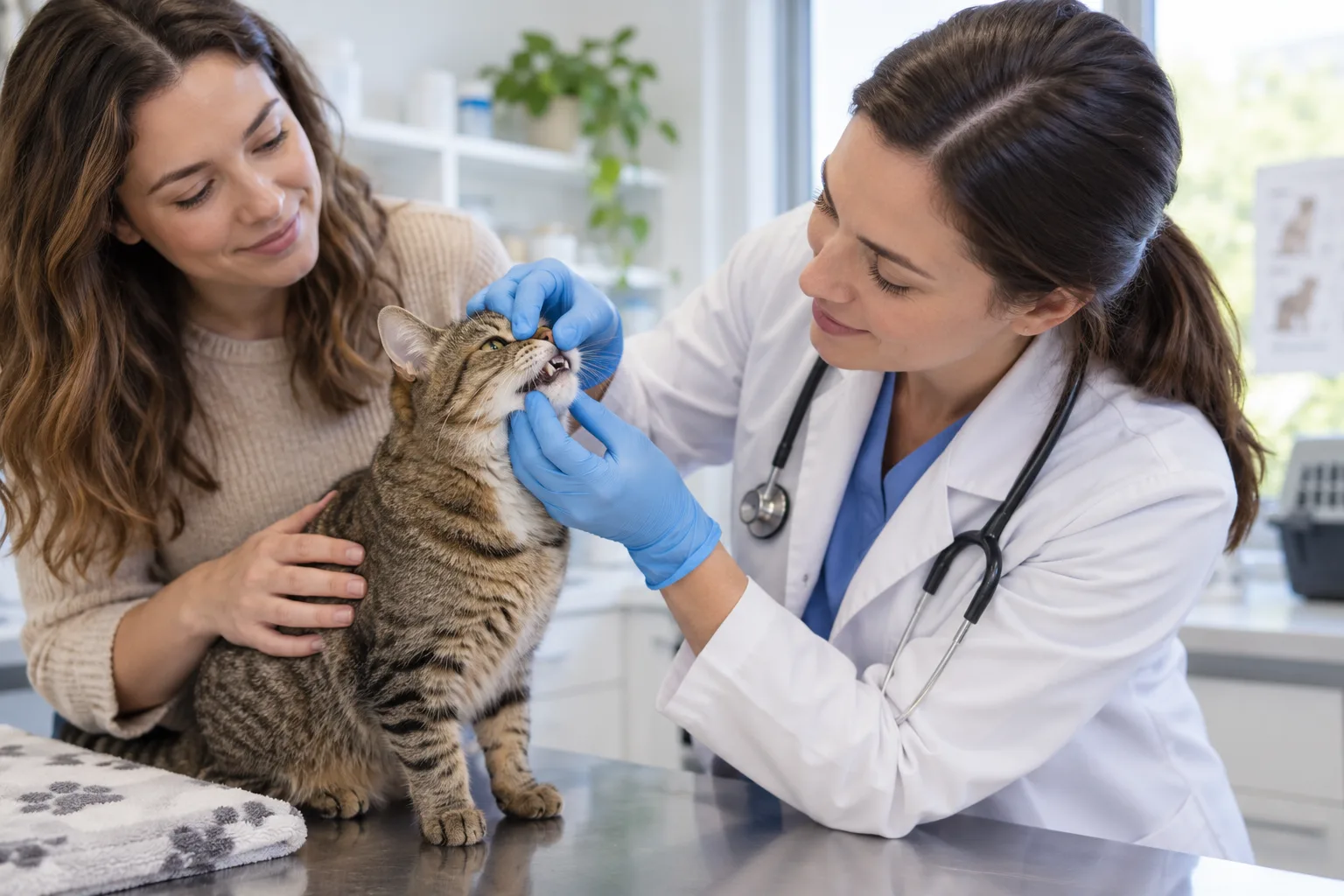
Veterinary professional examining a cat’s mouth beside the owner
Dental illness, a medical consultation and routine cleaning are different benefit questions.
Priority Candidate to investigate Boundary to verify
Diet prescribed for an eligible illness Pumpkin accident-and-illness Its stated food benefit excludes general health and weight maintenance
Sick-visit examinations and dental illness Fetch accident-and-illness Read the relevant dental services and exclusions in the offered form

The appropriate choice depends on the actual cat and contract. These are conditional research leads, not a three-brand quality ranking. We have not measured customer satisfaction, paid-claim rates or individualized prices. Confirm the state offer and eligibility before comparing the completed costs.

If a veterinarian prescribes a diet, that prescription alone does not guarantee insurance payment. The policy must include that expense category, the reason must satisfy its definition, and the underlying condition must qualify. Similarly, a benefit for dental illness is different from a routine cleaning allowance.

Write one decisive question beside each candidate. For example: “Does this exact food benefit address treatment of an otherwise eligible condition under these circumstances?” Request the applicable clause, and leave the row unresolved if the offered documents do not establish an answer.

Coverage

For an indoor kitten, value routine benefits separately

An indoor kitten may have a larger set of scheduled early-life visits than the same cat later. Ask the veterinarian which services are due and compare those actual expected expenses with the preventive package’s eligible items and limits. The package is a financing decision; it should not determine the medical schedule.

Consider an invented add-on costing $180 for the term. Suppose the routine services you already plan to use would earn no more than $150 under its item-by-item allowances. Even if the advertised total benefit is much larger, this household’s usable allowance is $30 below the extra price. No insurer or veterinary price is represented by these amounts.

If another planned, eligible service changes the arithmetic, recalculate rather than assuming the add-on is always poor value. Remove spending you would not otherwise choose and keep exclusions visible. Do not count a routine allowance as increasing the medical plan’s illness limit.

For the medical policy itself, check the kitten’s enrollment eligibility, required records and start rules in the offered version. There is no universal best kitten package merely because the animal stays inside.

Coverage

Choose the benefit you can keep using

After selecting the wanted services, examine the period over which you might use them. Ask how deductibles reset, whether an annual allowance is shared with other treatment and how an eligible condition is handled across renewal. A short first-term comparison can miss the structure that matters for repeated care.

Keep the known and unknown parts separate. The premium is an offered charge; an annual limit is a contractual ceiling; a possible future illness is uncertain. Do not multiply a guessed disease probability by an invented bill and present it as this cat’s expected saving.

A defensible indoor-cat choice might favor broader illness services while self-funding routine care, or pair medical protection with a preventive option whose usable allowance justifies its cost. In either case, preserve enough accessible money for your own share and the clinic’s initial bill. If replacing an existing policy, check what happens to recorded conditions before canceling it.

Evidence

Sources and policy context

These public references support the consumer or veterinary context. Named insurer details were checked in official product materials; the policy offered for your pet and state determines the actual terms.

Next step

Compare Current Pet Insurance Rates

Check current options for your pet and location, then compare the policy details, exclusions, costs, and eligibility before choosing.

Compare the policy before you choose Check the actual offer, exclusions and out-of-pocket terms.
See Rate Options